Tufnell Park Road man with a van guide for narrow streets
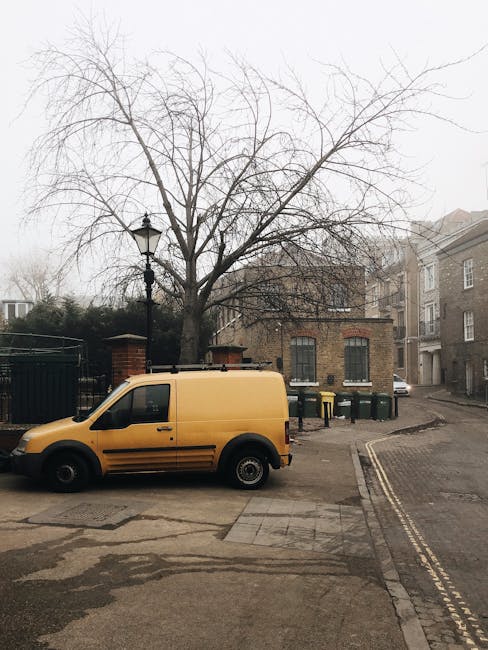
If you are moving on or around Tufnell Park Road, the street layout can shape the whole job. Narrow roads, parked cars, tight turning points, and the usual London time pressure can quickly turn a simple move into a bit of a puzzle. This Tufnell Park Road man with a van guide for narrow streets is here to make that puzzle easier to solve.
In plain English, the aim is simple: choose the right van size, plan access properly, and keep the move efficient without blocking the road or damaging belongings. That matters whether you are shifting a few bulky items, doing a flat move, or managing a same-day pickup that needs to go smoothly the first time. Let's face it, on a street that does not give you much room to breathe, a little planning goes a long way.
Below you will find practical guidance, local-style moving advice, common mistakes, and a sensible step-by-step approach you can actually use. If you want to compare options while reading, you may also find the man and van service useful, along with pricing and quotes for checking the numbers before you book.
Why Tufnell Park Road narrow-street moves matter
Narrow streets change the whole moving experience. A van that would be perfectly fine on a wider road can become awkward when there is barely space for two-way traffic or a safe loading gap. On a street like Tufnell Park Road, the problem is not just width. It is the combination of width, parking pressure, pedestrians, junction visibility, and the need to keep everything calm and controlled.
When a move is planned badly, the effects tend to show up fast: wasted time, extra carrying distance, unnecessary lifting, and in some cases a frustrated neighbour who has just wanted to get past with a pushchair or a delivery trolley. That does not mean the move is difficult by default. It simply means access has to be treated as part of the job, not an afterthought.
In our experience, the most successful narrow-street moves are the ones where the team thinks like a local driver and a loader at the same time. Where can the van stop safely? Can the back doors open without a parking battle? Is there room to carry a sofa from the front door to the vehicle without clipping a wing mirror? These little questions save a lot of hassle later. Honestly, they matter more than people expect.
If the move involves more than a few boxes, it is often worth using a service built for flexible access rather than a larger truck that needs more room to manoeuvre. That is where a removal van or a man with van setup can be the more practical choice.
How Tufnell Park Road man with a van guide for narrow streets works
The process is straightforward when broken into stages. First, the mover assesses the street and the property access. Then the right van size and loading plan are chosen. After that comes packing, timing, parking, and the actual collection or delivery. Nothing fancy. But each step matters more in a tight road than it would on an easy-access estate or a wide suburban lane.
A good narrow-street move often starts before the van even arrives. You confirm whether items need to come from a first-floor flat, a basement, or a front room at the end of a very narrow hallway. You decide whether anything should be dismantled. You also think about the route from the doorway to the vehicle. One small obstacle, such as a low wall or a badly placed wheelie bin, can slow things down if it has not been planned for.
The van itself should be chosen with the street in mind. A smaller or medium-sized vehicle is often easier to position safely and quicker to unload. That does not always mean smaller is better for every job, but it does mean the access plan should guide the vehicle choice rather than the other way round.
For many people, the practical route is to combine a careful move plan with support from removal services that understand local access quirks. If the job is a flat move, flat removals can be especially helpful because the workflow tends to be built around stairs, corridors, and short loading windows.
Key benefits and practical advantages
The biggest benefit is simple: less stress. But there are several more concrete advantages when the move is designed properly for narrow streets.
- Faster loading and unloading: The van can be parked closer to the entrance, which reduces carrying time.
- Lower risk of damage: Less squeezing around tight corners means fewer knocks to furniture, walls, and door frames.
- Better traffic flow: A well-managed stop keeps the street usable for neighbours and other road users.
- Smarter vehicle choice: You avoid booking a van that is bigger than the road can comfortably handle.
- More accurate pricing: Clear access details help avoid awkward add-ons or delays on moving day.
- Less physical strain: Fewer unnecessary lifts and longer carries make the job easier on everyone involved.
There is also a quieter benefit that people do not always mention: confidence. When you know the access plan is realistic, the whole day feels more manageable. You stop wondering whether the driver will get stuck halfway down the road. You stop worrying about where the sofa will sit while you try to open a door. Small things, yes. But on moving day, small things can dominate the mood.
For furniture-heavy jobs, pairing the move with furniture removals or a pre-planned furniture pick-up can make a tight street feel much less intimidating.
Who this is for and when it makes sense
This guide is useful for a wide mix of people. If any of the following sounds familiar, narrow-street planning is probably worth your attention.
- People moving in or out of a flat on a busy residential road
- Students shifting between shared accommodation and storage
- Homeowners moving a few bulky items rather than a full house load
- Office teams relocating equipment or archive boxes from compact premises
- Anyone needing a same-day or next-day collection with limited access time
- Customers moving delicate items such as a piano, large mirror, or awkward sofa
It also makes sense when you are not sure a full removal truck is necessary. A smaller move can sometimes be handled more efficiently with a flexible vehicle and an experienced driver who knows how to park, reverse, and load without fuss. Truth be told, a lot of people overestimate the vehicle they need. Bigger is not always better. Sometimes it is just harder to place.
If your move is more student-focused, the student removals option may suit you better. If you need a broader moving package, you can also look at home moves or, for business addresses, commercial moves.
Step-by-step guidance
Here is a practical way to handle a narrow-street move without turning the day into a scramble.
- Measure the awkward bits. Note the width of the street, the entrance, any tight turn, and the size of the largest item.
- Check loading access. Ask yourself whether the van can stop near the door for a few minutes without blocking everything.
- Sort the furniture. Dismantle beds, remove table legs, and secure loose parts. A sofa that is a touch too long suddenly matters a lot on a narrow stair landing.
- Pack with carry distance in mind. Heavier boxes should be solid but not overfilled. Keep handles clear if possible.
- Plan the van position. Think about where the rear doors will open, where the loading ramp will sit, and how long the stop will take.
- Allow for street life. Bins, parked cars, delivery vans, and pedestrians all shape the timing. London does what London does.
- Keep a buffer. Even a well-run move benefits from a small time cushion, especially if the street gets busy later in the morning.
If you are booking packing support too, packing and boxes or packing and unpacking services can take some of the pressure off. That can be especially useful when you are trying to move early and the corridor is already full of people, coats, and one mysteriously stubborn lamp shade.
Expert tips for better results
There are a few habits that make narrow-street jobs easier almost every time.
- Choose the smallest practical vehicle. Not the smallest possible. The smallest practical one.
- Keep the front path clear. Every extra object near the door becomes a snag point.
- Use more, smaller boxes for mixed items. They are easier to stack and less likely to burst or awkwardly tip.
- Protect door frames and corners. Simple covers or careful handling can prevent those annoying white scuffs on fresh paint.
- Pre-walk the route. Before lifting anything heavy, look at the full path from room to van.
- Load in the right order. Big items first, then stable boxes, then fragile items secured in gaps.
One helpful local-style trick is to think in "carry stages." If the van cannot park right outside, how far is stage one from the door to the road, and can that distance be cleared safely in a few trips? That one question can change the whole plan. A bit obvious, maybe. But people forget it.
For jobs involving especially heavy or delicate items, it can help to use specialist services such as piano removals or a more comprehensive removals package. If the move includes long-term holding space while access is being sorted, storage may be a practical bridge.
Common mistakes to avoid
Most narrow-street problems are predictable. That is the good news. The bad news is that people still make them, often for very normal reasons like rushing or assuming "it will probably be fine."
- Booking a van that is too large: It may look efficient on paper, but if it cannot position safely, the job slows down.
- Ignoring parking conditions: A nice-looking street can still be terrible for loading.
- Forgetting stair access: Tight stairs and a narrow van are a bad combination if the items are not prepared well.
- Packing unstable boxes: Weak cartons make handling harder and increase the chance of damage.
- Not telling the mover about access issues: This is the big one. The move team can only plan around what they know.
- Leaving everything to the last hour: Narrow streets punish panic packing. They just do.
Another one, and it sounds minor but is not: forgetting the weather. A wet pavement, a gust of wind, or early evening dimness can change the pace of a move more than people expect. At 7:30 in the morning, damp kerbs and cold hands make everything feel slightly harder. Not impossible. Just harder.
Tools, resources and recommendations
You do not need a van full of fancy equipment, but a few sensible tools help a lot. Most of these are about safety and efficiency rather than speed for speed's sake.
- Measuring tape: Useful for doorways, items, and awkward turns.
- Furniture blankets: Helpful for protecting surfaces during short carries.
- Straps and bungees: Good for keeping items stable inside the vehicle.
- Strong tape and labels: Simple, but they keep boxes organised.
- Gloves with grip: Worth having for heavier items or wet conditions.
- Box cutters and basic toolkit: Handy if dismantling is needed on site.
For related support, it can be worth exploring removal services, removal companies if comparing providers at a broader level, and removal truck hire only when you are sure a larger vehicle actually fits the access conditions. If you are not sure, that is perfectly normal. Better to pause and check than assume.
On the admin side, sensible move planning often goes hand in hand with clarity on payment and security and the written terms and conditions. That is not the exciting bit, admittedly, but it matters.
Law, compliance, standards and best practice
For a local man and van job, the key compliance issues usually sit around safe driving, safe loading, insurance, and general road courtesy. You do not need to turn it into legal homework, but it is wise to understand the basic expectations.
Drivers should park carefully, avoid unsafe obstruction, and handle loading in a way that does not create a hazard for pedestrians or other road users. In practice, that means being thoughtful about when the van stops, how long it stays, and whether the loading position leaves enough room for people to pass safely.
Good operators will also have clear procedures for handling items safely, especially if the move involves stairs, heavy lifting, or fragile goods. If you want reassurance on that front, insurance and safety and the company's health and safety policy are sensible places to review. For more general service standards, about us can also help you understand how the business presents itself and what kind of approach it takes.
There is also a straightforward best-practice point here: tell the provider about access limitations early. If the road is tight, if there is a steep kerb, if the building entrance is awkward, say so. That is not being fussy. That is giving the team the information they need to do the job properly.
Options, methods and comparison table
Different moving options suit different access conditions. A narrow street rarely rewards a one-size-fits-all approach.
| Option | Best for | Strengths on narrow streets | Watch-outs |
|---|---|---|---|
| Man with a van | Smaller to medium moves, flexible collections | Easier to park, simpler manoeuvring, often quicker access planning | May need multiple trips for larger loads |
| Removal van | General household or flat moves | Good balance of space and access-friendly size | Still needs a realistic parking position |
| Removal truck hire | Larger moves with plenty of loading space | Efficient if the road and turning space allow it | Can be awkward or impossible on tighter streets |
| Full removals service | Full-house moves, specialist items, complex access | More hands, more planning, better for awkward carries | May be more than needed for a small move |
The table makes one thing clear: narrow streets favour flexibility. A smaller, better-planned vehicle can outperform a larger one that struggles to get into position. That is especially true if the street fills up quickly or if access windows are tight. Sometimes the simple answer really is the right one.
Case study or real-world example
Here is a realistic example based on the sort of move people often ask for.
A tenant in a first-floor flat on Tufnell Park Road needed to move out with a double bed, a small sofa, six boxes, and a desk. The street had parked cars on both sides and not much room for a wide vehicle. The plan was to use a van that could stop briefly close to the entrance, keep the loading time tight, and avoid double parking.
Before moving day, the bed was dismantled, the desk legs were removed, and the boxes were grouped by room. That meant the team could carry items in a clear sequence rather than wandering back and forth looking for the next piece. The sofa went out first because it was the awkwardest item. Then came the boxed items, then the dismantled bed parts, all wrapped and labelled. Nothing dramatic. Just a calm, steady process.
What made the difference was not speed alone. It was that the access had been thought through. The street was narrow, yes, but the move never became chaotic because the loading plan matched the location. That is the whole point of this guide, really.
Practical checklist
Use this before moving day. A quick checklist can save you from a lot of avoidable mess.
- Confirm the full address and any access notes
- Measure large furniture and doorways
- Decide whether any items need dismantling
- Pack fragile goods in sturdy boxes
- Label boxes by room or priority
- Clear the hallway, stairs, and front entrance
- Check whether parking or stopping space is realistic
- Tell the mover about any stairs, tight corners, or low ceilings
- Keep essentials separate for easy access
- Review the booking details, timing, and payment method
Expert summary: On narrow roads, the best move is usually the one that removes friction before it starts. The right van size, proper packing, and a clear loading route will solve more problems than rushing ever will.
Get a free quote today and see how much you can save.
Conclusion
A narrow street does not have to mean a difficult move. It simply means the move needs to be handled with a bit more care, a bit more realism, and a lot less guesswork. If you plan the access properly, choose the right vehicle, and keep the packing and loading route simple, the whole day becomes easier to manage.
That is the real value of a Tufnell Park Road man with a van approach: it fits the street, the home, and the pace of London life without forcing a bulky solution where a flexible one would work better. And when the van pulls away and the last box is in place, that small sense of relief is worth a lot.
If you are still comparing options, it may help to review man with a van, home moves, or office removals depending on what kind of move you are planning. The right fit makes all the difference. Really, it does.
Frequently Asked Questions
What is the best type of van for a narrow street move on Tufnell Park Road?
A smaller or medium-sized van is often the most practical choice because it is easier to position safely and can usually stop closer to the property. The best size depends on the load, access, and whether the street allows easy loading without blocking traffic.
How do I know if my move will need more than one trip?
If you have several large items, lots of boxes, or bulky furniture that cannot be stacked efficiently, one trip may not be enough. A quick item list and rough volume check usually makes this clear before moving day.
Should I book a full removals service or a man and van for a narrow road?
If the move is smaller, a man and van service may be enough. If there are many items, awkward stairs, or heavy furniture, a fuller removals service can be better because it usually brings more support and a more structured loading plan.
How much notice should I give for a narrow-street move?
As much as you can. Even if the move is not complicated on paper, narrow access benefits from advance planning. That gives the mover time to consider vehicle size, timing, and any parking or carrying issues.
What should I tell the mover before the booking?
Tell them about stairs, parking restrictions, narrow hallways, large furniture, basement access, and any time limits. The more accurate the access information, the better they can plan the move.
Can a piano be moved on a narrow street?
Yes, but it needs extra care. A piano is heavy, awkward, and often sensitive to handling, so access planning and specialist lifting methods matter more than usual. It is one of those jobs where careful preparation really pays off.
What if parking is limited right outside my property?
Then the team may need a short carry from the nearest safe stopping point. That is not unusual in London, but it should be factored into the schedule so the move does not feel rushed.
Is packing important if the street is narrow?
Very. Good packing reduces the number of awkward items, speeds up loading, and lowers the chance of damage when items are carried over a longer distance from the property to the van.
Do I need storage if my moving date and access timing do not line up?
Storage can be a sensible bridge if there is a gap between leaving one property and entering the next. It is especially useful when access windows are limited or completion timings are uncertain.
What kind of items are hardest to move on narrow streets?
Large sofas, wardrobes, mattresses, pianos, and anything awkwardly shaped tend to be the hardest. They are not impossible to move, but they need more planning, more protection, and more attention to the route.
How can I avoid delays on moving day?
Prepare early, clear the access route, label boxes, dismantle furniture where practical, and tell the mover about any special access issues. The smoother the preparation, the less likely small problems are to grow into bigger ones.
What is the main takeaway from this guide?
The main takeaway is that narrow-street moves work best when the access plan comes first. Choose the right van, pack thoughtfully, and keep the route simple. That steady approach usually beats a rushed one, every time.